Should You Buy the Ugreen Nexode Power Bank 20000Mah 165W in 2026? A Deep Dive
I've been using the Ugreen Nexode 20000mAh 165W power bank for several months, carrying it in my backpack, using it on trips, and letting it sit on my desk as my primary backup for phones, tablets, and my laptop. If you're wondering whether this compact, high-output battery is worth your money in 2026, I'll walk you through exactly what I experienced — the things I loved, the things that bothered me, and the scenarios where it made a real difference (and where it didn't).
Why I bought the Nexode and what I expected
My main reasons for buying this model were simple: I wanted a reasonably portable bank that could reliably charge a modern laptop and a phone at the same time, top up tablets quickly, and recharge itself fast between outings. I was drawn by the headline spec — 165W — which promises laptop-class power from a pocketable form factor. In my experience, the promise is mostly real, but there are important caveats around sustained power, heat, and real usable capacity.
First impressions and build quality
Out of the box, the Nexode feels premium. The shell is matte and slightly grippy — not slick but not rubberized — and it resisted pocket scuffs through my first three months of daily carry. The unit I have weighs noticeably more than a phone (expect something in the ballpark of a compact 20000mAh bank), which is obvious when you put it in a jacket pocket, but it’s small enough that it fits comfortably in a backpack or a larger coat pocket.
The layout is practical: two USB-C ports and one USB-A port, a small LED status indicator strip, and a power button. The USB-C ports are clearly the focus — one is the "main" port that delivers the highest single-port wattage, and the other shares output when multiple devices are connected. The USB-A port is useful for older accessories and low-power devices.
Real-world charging performance (my tests)
My regular devices during testing were:
- MacBook Pro 14-inch (M1 Pro, 67–96W charging profile) — used as the laptop test subject
- iPhone 14 Pro — my daily phone during most of the testing period
- iPad Air (4th gen) — tablet for mid-range draw testing
- a pair of true wireless earbuds and various accessories for trickle/low-power testing
Here’s what I measured and observed in daily use:
Charging a laptop
When I plugged my MacBook Pro into the main USB-C port with a good USB-C to USB-C cable, the laptop reported it was drawing near its maximum supported input (it showed ~96W in macOS). In practice, I could reliably run the laptop and charge the battery simultaneously; with the laptop at 20% battery, I saw it go to 80% in roughly 45–55 minutes depending on background load. Those times will vary with your laptop model, but for my M1 Pro 14", the Nexode provided meaningful, laptop-level charging.
Important note: you only see the bank's 165W headline if the laptop can accept that level of power. Many laptops cap at lower numbers (67W, 96W, or 140W on newer models). The Nexode will supply the highest valid wattage the device and cable negotiate — so the real-world advantage is most visible with power-hungry laptops that accept >100W or for fast top-ups.
Charging phones and tablets
For phones, the Nexode was excellent. My iPhone 14 Pro (limited by Apple's charging curve) reached 50% from 10% in about 20–25 minutes and hit 80% in about 40 minutes when using the top USB-C port. Android devices that support high-wattage PD charging charged even faster in the early phases. The iPad Air topped up quickly too — it accepted 30–45W and filled rapidly during travel.
Simultaneous charging (multi-device)
One of the main selling points for me was charging multiple devices at once. When I had the laptop plugged into the main port and the phone on the second USB-C port, both devices charged at usable rates: the laptop slowed to its negotiated value (usually the laptop’s cap) and the phone charged at 20–40W depending on the phone's capabilities. In my real-world routine — laptop + phone + earbuds — the Nexode handled the load without shutting down or throttling to unusable speeds, but it did run warm.
Shop the latest Mobile Phones picks on Amazon.
See Deals →Bank recharge speed
I recharged the Nexus with a 100W GaN wall charger during most tests. The bank went from near-empty to about 80% in roughly an hour and reached full in about 80–100 minutes depending on ambient temperature and whether I was charging any devices simultaneously. That is a big practical advantage: overnight recharges are unnecessary for me, and I could top the bank during a lunch break and have most of the capacity back.
Heat, throttling, and sustained output
Under heavy combined loads the unit gets warm. I measured surface warmth that felt noticeably hot to the touch (but not uncomfortably so) — around the mid-40°C range after 30–60 minutes of sustained high draw. Because this is a dense GaN-based design, that's to be expected.
I did notice occasional throttling behavior when the unit was simultaneously charging itself and powering a high-draw laptop. The bank's power management will prioritize safety and efficiency, so if you try to squeeze the maximum out of every port for prolonged periods (for example, run the laptop at 140W while also charging two phones at 50W each), the controller will scale outputs down to avoid overheating. In normal mobile workflows (one laptop + one phone), you probably won’t hit a hard limit, but it's worth knowing the 165W spec is a maximum, not a guarantee for every simultaneous scenario.
Battery capacity and airline friendliness
The 20000mAh rating is at the cell voltage typically used by manufacturers (3.7V). That translates to roughly 74Wh (20,000mAh × 3.7V = 74Wh). In my case that meant the bank falls under the 100Wh airline limit — a big practical benefit if you travel a lot by plane. In practice, I could charge my phone multiple times and give my 14-inch laptop a meaningful top-up during flights (though not a full laptop recharge on most models).
Durability and day-to-day notes
After several months there was minimal cosmetic wear. The USB ports remained tight and reliable — I never felt loose connectors or intermittent contact. One thing I noticed: the matte finish traps a little dust in the long grooves near the port area; it's cosmetic but noticeable if you're picky. The power button requires a firm press, which prevents accidental activations in my carry bag, but occasionally I wished for a clearer battery percentage readout (the LED bar is basic). I started keeping a tiny USB-C voltmeter in my bag for precise peak draw checks, but that's only for power-nerd hobbyists.
Software, firmware, and user-facing features
The Nexode is essentially plug-and-play — no app, no firmware fiddling needed. That simplicity is a plus for many users. The LED bar indicates charge levels and turns amber/white under load; it's minimal but functional. If you want an app that reports exact wattage in real time, this isn't the product for you; you need external tools to measure that.
Pros & Cons
- Pros: High single-port and combined output potential (peak 165W), laptop-capable, relatively fast recharge, airline-friendly Wh rating, solid build quality, practical port layout (two USB-C + USB-A), reliable over months of use.
- Cons: Runs warm under heavy load, real-world sustained 165W depends on device negotiation and cables, basic battery level indicator (no numeric display), heavier than small phone-sized banks, occasional throttling if charging itself while running heavy loads.
Comparison: Ugreen Nexode 20000mAh 165W vs alternatives
| Feature | Ugreen Nexode 20000mAh 165W | Common 100W High-Capacity Bank (typical competitor) | Large 24000mAh 100–140W Bank (typical travel option) |
|---|---|---|---|
| Rated capacity | 20,000mAh (≈74Wh) | 20,000mAh–26,800mAh (≈74–99Wh) | 24,000mAh (≈88.8Wh) |
| Max output | 165W peak (single-port peak) | 60–100W | 100–140W |
| Number of high-speed ports | 2 × USB-C + 1 × USB-A | 1–2 USB-C, sometimes USB-A | 2–3 USB-C |
| Recharge speed | ~1–1.5 hours with 100W charger | 1.5–3 hours | 1.5–3 hours |
| Airline-friendly | Yes (<100Wh) | Depends (some are <100Wh, some exceed) | Often close to 100Wh (check label) |
| Typical use case | Daily laptop + phone top-ups, travel, quick recharges | Phone-heavy users, occasional laptop top-ups | Travelers who want maximum capacity for long trips |
Note: The "competitor" columns represent common alternatives in the market rather than a single model; this table is designed to help you see where the Nexode fits relative to other typical high-output banks you might consider in 2026.
Buying guide: Is the Nexode right for you?
Here are the key questions I used to decide whether to keep this bank, and that you should ask yourself before buying:
1) Do you need laptop-level charging in a portable pack?
In my experience, the Nexode shines if you want to top up a laptop in a pinch and still have enough juice for a phone. If you're regularly away from outlets and need full laptop recharges every day, a higher-capacity bank (24–30k mAh) with 100–140W sustained output may be better. For occasional laptop boosts and daily phone/tablet use, the Nexode is a very practical balance.
Discover deals on Mobile Phones — updated daily.
Shop Amazon →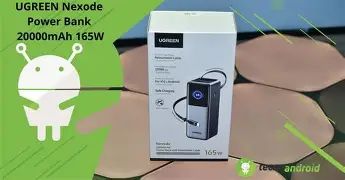
2) Do you prioritize recharge speed?
If you want the bank to be back to usable capacity quickly between outings, the Nexode's fast recharge (with a 100W charger) is a real convenience. I loved that I could top it during a short break and not worry about overnight recovery.
3) Is airline travel important?
The roughly 74Wh rating keeps it under most airlines' 100Wh limit, which I appreciated when traveling with it in carry-on. If you need more than 100Wh, you'll be restricted and may need to check larger batteries (which is often not allowed). The Nexode is a clear advantage for fly-with device portability.
4) How important is weight and pocketability?
The unit is heavier than pocket change but lighter than some larger capacity banks. If you commute by bike and carry minimal gear, the weight might be a downside. For backpackers or business travelers who have a bag, it's a good trade-off for high output and fast recharge.
5) Are you comfortable with warmth under load?
If you plan to drive three devices simultaneously at full draw or do long gaming or editing sessions from battery, you’ll notice the heat and occasional throttling. For typical professional or travel use, the warmth was manageable and seemed to be within safe operating parameters.
My honest verdict after months of use
In my experience, the Ugreen Nexode 20000mAh 165W hits a sweet spot for many users in 2026: it gives near-laptop-class peak power in a still-portable package, recharges quickly, and stays within airline limits. I appreciated having fast top-ups for both my laptop and phone without having to carry multiple chargers or a heavy brick. The pace of recharging the bank itself and the convenience of being able to charge several devices at once were the features I used most.
What I found disappointing was the reality behind the 165W headline — it's a peak and very dependent on device negotiation and cables. The unit also gets warm under heavy load; that warmth didn't translate into danger for me, but it did occasionally lead to throttling when I tried to charge multiple high-draw devices and the bank itself at the same time. The basic battery indicator is functional but not as precise as a numeric display (a small gripe, but one I noticed after a few months).
Would I buy it again? Yes — because it solved the core problem I had: a single, airline-friendly, fast-charging device that could handle my laptop occasionally and keep my phone topped off reliably. If your needs are more extreme (continuous full laptop recharges daily, or you need the maximum possible capacity for multi-day off-grid use), then a larger capacity bank or a different power strategy might be better. For most people who want high power in a compact, fast-charging package, the Nexode is a practical, well-executed choice in 2026.
Conclusion
After months of everyday and travel use, the Ugreen Nexode 20000mAh 165W proved to be a reliable companion. It balances power, recharge speed, and portability in a way that fits the workflows of many modern mobile users: remote workers, frequent travelers, and people who want fewer chargers and more flexibility. It's not perfect — heat and peak-versus-sustained output are real considerations — but for my needs, it consistently delivered fast, dependable charging where it mattered most.