Biggest Ugreen Nexode 500W 6 Port Charger Buying Mistakes (And How to Avoid Them)
Introduction
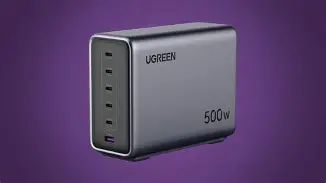
The Ugreen Nexode 500W 6 Port Charger promises to replace a handful of bricks, adapters and power strips with a single, high-capacity charging hub. For buyers who want to consolidate chargers for laptops, phones, tablets and accessories, a 500W multiport station can look like an obvious upgrade. Yet several common mistakes lead buyers to buy the wrong charger, get disappointing charging results, or run into compatibility and safety problems.
This article examines the typical traps shoppers fall into when evaluating and buying the Ugreen Nexode 500W 6 Port Charger and similar high-power multiport units. It explains what buyers typically care about in real-world use—simultaneous charge behavior, cable compatibility, heat management, power allocation, and electronics safety—and provides practical guidance to avoid those pitfalls. A clear product analysis, pros & cons, a comparison table to help frame expectations, and a practical buying guide follow.
Product overview and what matters in real-world use
At a glance, a 500W 6-port charger promises a lot: several USB-C ports capable of Power Delivery for laptops and tablets, a mix of USB-A ports for legacy devices, and intelligent power distribution so multiple devices can charge simultaneously. For families, remote workers, or anyone with a small arsenal of devices, the convenience is obvious. However, real-world users care less about headline totals and more about how power is actually shared under load, whether the charger gets hot, whether it supports the exact PD/PPS profiles their devices need, and how cable choice affects outcomes.
Common practical scenarios:
- Home office: A laptop, phone, earbuds, and webcam all charging from the same desk hub while meetings run and the laptop is under load.
- Family charging station: Multiple phones and tablets arriving nightly — a mix of fast-charging and older devices with different cable qualities.
- Travel or portable studio: A need to reduce brick count but still provide reliable power to a laptop and accessories over long days.
- Media/gaming setup: Devices that draw bursts of power (laptop running games, phone on high-speed charging, external drive bus power).
Those use cases underline the buyer priorities: accurate power delivery (per-port behavior), cable quality and compatibility, cooling and placement, and safeguarding the home circuit. Mistakes almost always come from misunderstanding one of these areas.
Detailed product analysis: what to check and what often goes wrong
1. Misreading "500W" as per-port power
Headline totals are easy to misunderstand. "500W" is the aggregate maximum the unit can deliver when the combined demand from all ports is highest. It is not the amount any one port will supply by default, and it does not mean every port can output laptop-class power at the same time. Buyers who expect every port to deliver top-tier wattage simultaneously are often disappointed.
How to avoid this mistake: read the fine print or product documentation to understand per-port limits and power-sharing rules. If the seller's materials are unclear, look for independent tests or user's reports showing simultaneous loads. For many, the important metric is the maximum a single port can give while others are drawing power, and whether the charger prioritizes port 1 or distributes evenly.
2. Ignoring cable and adapter quality
Fast charging isn't just about the brick — cables and connectors matter. USB-C cables vary in their ability to carry high-wattage PD signals. A cheap or damaged cable can limit a laptop to a fraction of the charger’s capability or prevent PD handshakes from working properly.
How to avoid this mistake: use certified, high-quality USB-C cables (capable of the PD power level needed). For higher-wattage charging, look for cables rated for the power the laptop requires and, where relevant, for USB-C e-marker support. Test cables with lower-power devices first to verify correct behavior before connecting an expensive laptop under heavy load.
3. Expecting identical performance across devices (PD/PPS and device quirks)
Different manufacturers implement Power Delivery and PPS (Programmable Power Supply) differently. Some laptops request specific voltages or negotiate proprietary handshake patterns. Phones and laptops may also behave differently when sharing power from the same source.
Shop the latest Mobile Phones picks on Amazon.
Browse Now →How to avoid this mistake: check device compatibility. For a multi-device household, test the charger with the most demanding device first and verify performance. If a device is known to require a particular PD profile (for example, a certain voltage step or PPS), confirm that the charger advertises support for it or find test evidence that it does.
4. Overlooking heat and placement
High aggregate power means heat. In cramped, poorly ventilated locations a multiport charger can run hotter than expected. Persistent high temperatures reduce efficiency and longevity of electronics and can trigger thermal throttling or safety cutoffs.
How to avoid this mistake: ensure clear airflow around the charger, avoid stacking it under other devices, and prefer a location where heat can dissipate. If users plan to run multiple high-load devices for long periods (e.g., laptop + tablet + phone), they should monitor the charger’s temperature during the first uses to ensure it remains within comfortable limits.
5. Not considering home electrical limitations and surge protection
A 500W draw is within normal residential capacity, but simultaneous use of other high-load appliances on the same circuit (space heaters, kettles) can trip breakers. Also, surge protection varies between chargers; some models focus purely on power delivery and offer minimal surge suppression.
How to avoid this mistake: be mindful of the total load on a circuit and use the charger on a dedicated outlet when appropriate. For regions prone to voltage fluctuations, consider external surge protection or an outlet with built-in protection rather than relying on the charger alone.
6. Assuming firmware and support parity
Some advanced chargers receive firmware updates or provide app-based monitoring; others are fixed-function hardware. Buyers expecting ongoing firmware improvements or remote diagnostics may be disappointed if the model lacks these features.
How to avoid this mistake: review the manufacturer's support approach before buying. If firmware updates, app features, or extended warranties matter, confirm their availability and ease of use.
Pros & Cons
- Pros
- High consolidated power—reduces the need for multiple bulky chargers in a home or office.
- Convenient multi-device charging for desks, family charging stations, and small studios.
- Typically includes a mix of USB-C and USB-A ports for wide device compatibility.
- Good option for those who want to minimize wall clutter and streamline charging setup.
- Cons
- Aggregate rating can be misleading; per-port performance under full simultaneous load varies.
- Requires quality cables to realize full power—cable costs can add up.
- Heat management and ventilation become important with heavy simultaneous use.
- Not all devices behave identically with power-sharing chargers; some may charge slower than expected.
Comparison
The table below helps place the Ugreen Nexode 500W 6 Port Charger in context against other common categories of chargers buyers consider.
| Feature | Ugreen Nexode 500W 6 Port Charger | Single-port 100W PD Charger | Typical 4-port 100W-class Multiport |
|---|---|---|---|
| Ideal use | Desk/family hub for multiple simultaneous devices | Fast charging one laptop or device at full speed | Small group charging—phones, tablet and one laptop |
| Aggregate power | High (500W headline); good for multiple devices | Low (focused on single high-wattage device) | Moderate (commonly 100–200W total) |
| Per-port predictability | Variable—depends on power-sharing rules | Highly predictable for the one port | Generally predictable but limited by total |
| Port variety | Multiple USB-C + USB-A options | Usually one USB-C (or proprietary) | Mix of USB-C and USB-A but fewer ports |
| Portability | Less portable, more of a desktop hub | Highly portable for travel | Moderately portable |
| Heat management | Requires ventilation; can get warm under load | Usually better managed due to single output | Moderate heat; depends on design |
| Best for | Users with several devices and a central charging point | Users who need max speed for one device | Users who want fewer bricks but fewer simultaneous high-wattage devices |
Buying guide: avoid these mistakes when choosing a 500W multiport charger
1. Clarify your real power needs
Create an inventory of devices and estimate their peak charging wattage. A laptop may draw 60–100W under load, a tablet 18–45W, and phones commonly between 15–45W during fast charging. Add these expected peaks and compare them to the charger’s aggregate rating. Remember that sustained laptop loads and screen usage increase power draw.
2. Understand power distribution and real-world simultaneous performance
Look for documentation or tests that show how the charger behaves when multiple ports are in use. Key questions: does any port have priority? Is power distributed proportionally? Does the charger throttle under sustained load to protect itself? User forums and independent reviews are helpful sources for this information.
Looking for the best Mobile Phones deals on Amazon?
View Offers →3. Choose the right cables and verify port type for each device
Match device requirements with the correct port type. For high-wattage laptop charging, use USB-C cables designed for high PD delivery and, when required, cables with e-marker chips. For fast charging phones, ensure the charger supports the device's requested PD or PPS profile.
4. Plan for heat—location and ventilation matter
Place the charger on a flat, breathable surface with clearance around it. Avoid enclosed cabinets unless the charger is specifically designed for that environment. If heavy simultaneous use is anticipated (e.g., remote work days with laptop + tablet + phone charging), check the unit's temperature during an initial stress test.
5. Verify safety features and warranty
Confirm the charger includes standard protections—overcurrent, overvoltage, short-circuit protection, and thermal cutouts. Check warranty length and manufacturer support reputation. For home setups where reliability matters (work-from-home professionals, shared family charger), warranty and reachable support can save headaches.
6. Consider future-proofing and expandability
Think ahead to changes in device fleet. Will buyers soon adopt another laptop, or move to devices with higher charging demands? If growth is likely, a higher aggregate power tier or a model known for stable power-sharing can be a better long-term buy.
7. Read independent tests and user reports
Manufacturer specs are useful, but third-party reviews and long-form user reports often reveal practical matters like quirks in port labeling, real-world heat under simultaneous load, cable sensitivity, and firmware behavior. Prioritize sources that include simultaneous-charging tests and measurements.
Common buyer scenarios and recommended approach
To make decisions tangible, here are recommended approaches for three common buyer profiles:
- Remote worker with one high-power laptop and several accessories: Favor predictable per-port behavior and high-quality USB-C cables. Test with the laptop under load before regular use to verify charging speed and thermals.
- Family charging hub for phones and tablets: The multiport 500W station is typically overkill for basic phone charging, but it provides future flexibility. Check that some ports supply lower-power charging efficiently to avoid wasting capacity.
- Traveler or digital nomad: A single-port 100W PD charger may be a better travel companion due to size and reliability. The 500W hub is better as a base at a home or coworking space.
Conclusion
The Ugreen Nexode 500W 6 Port Charger and similar high-capacity hubs can dramatically simplify charging for multi-device households and home offices. The biggest buying mistakes—misreading aggregate wattage as guaranteed per-port power, underestimating the importance of cables, ignoring device-specific PD/PPS requirements, and overlooking heat and circuitry limits—are avoidable with a little preparation.
Buyers who clarify their device needs, confirm per-port behavior under simultaneous loads, use certified cables, and provide adequate ventilation will get the most from a 500W multiport charger. Independent reviews and user reports are especially useful for finding how a specific unit performs in the real world. With the right expectations and setup, consolidating to a single, well-chosen charging hub brings convenience without sacrificing charging speed or safety.