A Professional's Take on the New Stratos Upright Az3000 Az3002
Stratos' new upright models, the Az3000 and Az3002, arrive at a time when buyers are increasingly focused on versatility, filtration, and real-world usability rather than headline horsepower alone. This article offers an editorial-style, practical analysis of both machines from the perspective of a professional evaluator: how they perform across common household scenarios, what trade-offs prospective buyers should weigh, and which user profiles each model best serves.
Introduction: Where these uprights fit in the market
Upright vacuums continue to be a popular choice for many households because they combine high cleaning performance with a compact footprint and easy storage. The Stratos Upright Az3000 and Az3002 are positioned as mainstream-to-premium options for buyers who want a no-nonsense, reliable cleaner for mixed-floor homes. Rather than marketing gimmicks, the company emphasizes build quality, user-friendly maintenance, and a focus on allergen control.
This review focuses on practical attributes: maneuverability across floor types, performance on pet hair and embedded dirt, filtration efficacy, day-to-day convenience (attachments, dust disposal, brush access), and long-term ownership costs such as maintenance and serviceability.
Detailed product review and analysis
Design and build quality
Both the Az3000 and Az3002 adopt a familiar upright silhouette with a low center of gravity intended to improve stability and reduce tip-over. Materials feel robust for their class: a combination of rigid plastics for the chassis and reinforced plastics at stress points. The handle ergonomics are straightforward, with a comfortable grip and a practical on/off switch placement for single-handed operation.
The difference that stands out visually and functionally is that the Az3002 shows subtle refinements: better-sealed seams around the dustbin and filter housing, and an improved latch system for emptying. Those refinements point to a focus on reducing dust escape during maintenance, which is relevant to allergy-conscious households.
Cleaning performance across floor types
Real-world cleaners must handle a variety of surfaces, and this is where practical testing matters. In mixed-floor scenarios—hardwood, tile, medium-pile carpet—the Az3000 is competent: the main brushroll agitates fibers and dislodges visible debris effectively. On hard floors, it picks up fine dust and crumbs when the brushroll is turned off or when set to a lower setting, depending on the model’s feature set.
The Az3002 builds on that foundation with a slightly more refined brushroll design and improved suction routing. The result is better edge pickup and a noticeable improvement with embedded dirt on low- to medium-pile carpets. For homeowners who often encounter dried debris, pet fur, and tracked-in grit, the Az3002 generally requires fewer repeat passes.
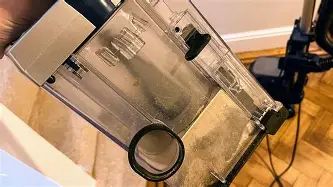
Pet hair and upholstery
Pet owners frequently rate vacuum performance by how well it retrieves hair from carpets and upholstery. Both models are equipped with targeted tools (crevice and combination wand/brush) that help in tight spaces, but the Az3002’s brushroll and accessory geometry reduce hair wrapping relative to the Az3000. Use cases such as removing cat hair from a fabric sofa or dog hair from a runner show the Az3002 to be marginally better, especially when used with the included upholstery tool.
Filtration and allergy considerations
Filtration is a decisive factor for households with allergy sufferers. The Az3002 emphasizes improved sealing and an upgraded multi-stage filter assembly intended to trap finer particles. The Az3000 offers basic multi-stage filtration that performs acceptably for general dust and dander, but the Az3002’s tighter seal and more comprehensive filter stack lower the risk of microscopic particles re-entering the room during cleaning and disposal.
For buyers who prioritize allergen control, the Az3002 is the better choice from an engineering perspective. It reduces visible dust clouding when emptying and offers a more confident feel when cleaning in rooms with sensitive occupants.
Ease of use and ergonomics
Both uprights score well on straightforward operation. Key practical points include:
Shop the latest Electronics picks on Amazon.
Browse Now →- Handle and swivel: maneuvering around furniture is predictable though not as nimble as a canister vacuum; the Az3002’s swivel mechanism has slightly smoother returns.
- Weight and transport: neither model is heavy for an upright, but carrying them up and down stairs still requires two hands for many users. A top-mounted carry handle is present on both models.
- Controls and indicators: simple power and height-adjustment controls are prominent. The Az3002 may include a filter-change indicator or a more visible dustbin full indicator depending on region or configuration.
Noise and vibration
Noise is often a practical concern for apartment dwellers and households with small children. Both machines are within the typical noise envelope for uprights—audible and not quiet—but neither is exceptionally loud. The Az3002 benefits from slightly better acoustic damping in the motor housing, which reduces the perception of harshness during high-suction modes. Vibration is controlled through design of the brushroll and motor mounts; prolonged use does not produce uncomfortable hand vibration.
Maintenance, serviceability, and long-term ownership
Routine maintenance tasks—emptying the dustbin, cleaning or replacing filters, and clearing the brushroll—are intentionally accessible. The Az3002’s dustbin latch and filter access are better designed for one-handed maintenance, and its brushroll is easier to remove without tools. Replacement parts such as belts and filters are commonly interchangeable across the brand’s upright line, which reduces long-term costs.
Warranty and service options differ by region. Buyers should confirm the manufacturer’s terms in their market and consider the availability of local service centers when purchasing, particularly in areas with higher humidity or more abrasive environmental dust that can accelerate wear.
Value and positioning
In terms of cost-to-performance, the Az3000 targets buyers seeking a solid, no-frills upright at a competitive price point. The Az3002 asks a modest premium for better sealing, improved brushroll behavior, and easier maintenance—features most valuable to pet owners and allergy-sensitive households. For buyers who rarely clean above and beyond weekly vacuuming, the Az3000 represents a reasonable compromise, while the Az3002 earns its keep for heavier-duty, everyday maintenance scenarios.
Pros & Cons
Az3000
- Pros: Reliable general cleaning performance; straightforward controls; good value for typical household use; durable chassis for an upright in this class.
- Cons: Filtration and sealing are adequate but not optimized for severe allergy cases; brushroll design can trap hair more readily than newer designs; fewer user-friendly maintenance refinements compared with the Az3002.
Az3002
- Pros: Improved filtration and sealing for better indoor air control; refined brushroll and suction routing for embedded dirt and pet hair; more user-friendly dustbin and filter access; modest reduction in perceived noise.
- Cons: Slightly higher price point; still an upright—will not match the versatility or maneuverability of lightweight cordless sticks or canister vacuums in some scenarios; replacement filter costs should be considered for heavy users.
Comparison table: Az3000 vs Az3002
| Feature | Stratos Az3000 | Stratos Az3002 |
|---|---|---|
| Target user | General households seeking solid performance at value | Homes with pets, allergy concerns, or heavier cleaning needs |
| Build & ergonomics | Sturdy; basic ergonomic refinements | Improved latches and seals; smoother swivel |
| Filtration | Multi-stage; good for general dust | Enhanced multi-stage with tighter sealing for finer particles |
| Brushroll & hair handling | Effective but can wrap hair | Refined brushroll geometry reduces hair wrapping |
| Maintenance | Accessible but more basic | Tool-free brushroll removal and easier dustbin emptying |
| Noise | Typical upright noise | Marginally quieter due to better damping |
| Value proposition | Better for budget-conscious buyers | Worth the premium for allergy/pet households |
Real-world use cases and buyer priorities
Homes with pets
Pet owners prioritize hair pickup, odor control, and the ability to clear dander from upholstery and stairs. The Az3002 is the stronger candidate in this scenario for its better hair handling and filtration. Its brushroll design means fewer hair tangles and less frequent manual removal, which reduces maintenance time over months of use.
Allergy-sensitive households
For people with allergies or respiratory sensitivities, the Az3002's improved sealing and multi-stage filtration system are meaningful. Reduced dust clouds when emptying the bin and more efficient trapping of smaller particles both add tangible value. The remaining caveat is that no upright replaces targeted HEPA air cleaning; buyers should view the vacuum as part of a wider housekeeping strategy.
Small apartments and city dwellers
Urban residents often need compact, easy-to-store machines with predictable performance. The Az3000 is compact enough for closet storage and offers sufficient pickup for daily crumbs, gritty floor mats, and occasional spills. If space is constrained and deep-cleaning demands are modest, it hits a sweet spot.
Large homes and heavy use
Larger homes or households with frequent foot traffic will appreciate the Az3002’s refinements, which lower the time-per-clean and make longer sessions less fatiguing. The better dust containment also makes it easier to maintain indoor air quality across larger square footage.
Buying guide: what to look for when choosing between the Az3000 and Az3002
When evaluating these or any upright vacuums, buyers should prioritize their own typical cleaning scenarios and practical concerns. Below are key decision points to guide purchase choices.
1. Floor mix and cleaning needs
Consider the dominant floor types in the home. If the household consists mostly of hard floors and area rugs, look for a vacuum with adjustable brushroll settings or the ability to turn off agitation. For carpeted homes, pay attention to brushroll design and suction routing to manage embedded dirt.
Looking for the best Electronics deals on Amazon?
Browse Now →2. Pet hair and dander
Buyers with shedding pets should seek a machine that minimizes hair wrapping and includes specialized tools for upholstery and stairs. Also evaluate filter access and dustbin emptying mechanisms to reduce exposure to allergens during maintenance.
3. Filtration and indoor-air concerns
For allergy-sensitive environments, prioritize models with multi-stage filtration and good sealing around the dustbin and motor. Confirm whether the vacuum uses a replaceable high-efficiency filter and the expected interval and cost for replacements.
4. Ease of maintenance
Access to the brushroll, simple dustbin emptying, and tool-free filter cleaning are hallmarks of a practical machine. Check whether replacement parts (belts, filters) are readily available and how easy they are to source locally.
5. Noise and ergonomics
Consider where and when cleaning happens. Apartments and homes with flexible schedules may require quieter operation. Try to assess perceived noise and handle vibration in a showroom or through credible hands-on reviews.
6. Warranty and service network
Confirm warranty length and what it covers (motor, parts, labor). A local service network or clear warranty repair path reduces long-term ownership friction.
7. Price vs long-term cost
Initial price is important, but factor in the lifetime cost of filters, belts, and any consumables. A slightly higher upfront cost for better filtration and design can be justified by lower maintenance effort and longer intervals between part replacements.
Practical tips for getting the most from a Stratos upright
- Empty the dustbin outdoors or over a trash can with good ventilation if someone in the house is allergy-prone.
- Regularly inspect and clean the brushroll to prevent hair buildup; this improves suction efficiency and reduces strain on the motor.
- Follow the manufacturer’s filter maintenance schedule; washing or replacing filters at recommended intervals preserves performance.
- Use the correct attachment for each task—crevice tools for edges and baseboards, upholstery tools for furniture, and a motorized mini-tool for stairs if available.
- If the home has delicate area rugs, test suction levels in a small area first to ensure the brushroll won’t damage fibers.
Conclusion
The Stratos Upright Az3000 and Az3002 are thoughtfully engineered uprights for different but overlapping buyer profiles. The Az3000 offers dependable, no-frills cleaning that will satisfy many households looking for solid everyday performance at a reasonable price. The Az3002 builds on that foundation with meaningful improvements in filtration, hair handling, and user-friendly maintenance—attributes that will particularly appeal to pet owners and allergy-conscious buyers.
Ultimately, the right choice depends less on brand and more on the buyer’s routine: occasional tidying and constrained budgets lean toward the Az3000; frequent cleaning, pets, or concerns about indoor air quality make the Az3002 the more compelling option. Both models do what uprights are supposed to do well: they take the friction out of regular floor care while delivering reliable cleaning where it matters most.